




Nursery Room
Buttercup Room (6 weeks – 12 months)
The first two years of life are incredibly important for a child’s development, as they lay the foundation for future growth and learning. During this period, children achieve significant milestones such as sitting up, crawling, walking, and beginning to speak.
These early years are marked by rapid brain development, with the brain developing faster than any other stage in their life. This is also a critical time for emotional and social development, as children form strong attachments to their caregivers and start to understand and express emotions.
Our Buttercup Room is designed to create a warm, welcoming and home-like atmosphere. Our educators will work on creating trust and building a bond with your baby so they feel safe and supported whilst commencing their learning journey. The Buttercup Room also features a separate, dedicated cot room where your baby can safely sleep according to their routine.
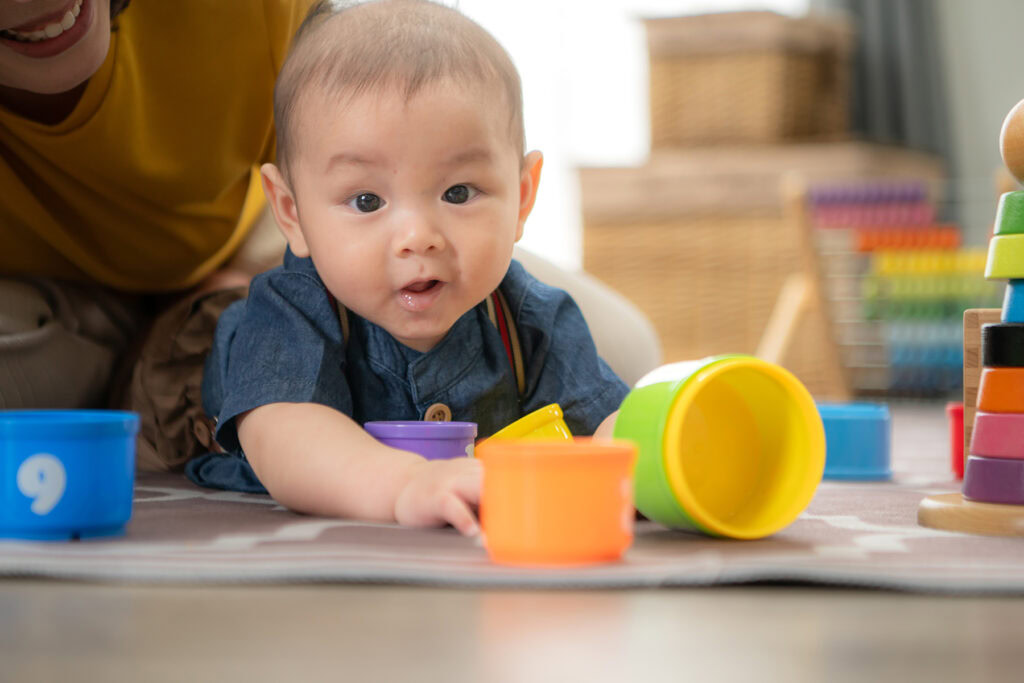
Our Nursery Program provides a nurturing environment filled with sensory toys and equipment for early, play-based learning and exploration. Daily activities and intentional teaching will support your child reaching developmental milestones and transition into our Toddler Program.
As some babies will still be breastfeeding during this time, we offer the opportunity for mothers to come into the centre and feed their babies if this was something they wish to continue. Our dedicated educators will work with you on how this could work. Alternatively, you can choose to provide us with your expressed breastmilk or preferred formula.
We understand that the decision to place your baby in childcare can be very difficult. We involve parents as much as possible and we value their input. We communicate regularly on your child’s growth and development either in-person or via our Blossom parent app
Learning experiences include:
Physical development
- Developing fine motor skills through activities like grasping toys and finger painting.
- Enhancing gross motor skills by crawling, sitting up, standing, and eventually walking.
- Strengthening hand-eye coordination with activities like stacking blocks and playing with puzzles.
Cognitive development
- Exploring cause and effect through play with interactive toys.
- Recognising shapes, colours, and patterns through various sensory activities.
- Developing problem-solving skills by engaging in simple puzzles and games.
- Encouraging early numeracy and literacy skills through story time and counting activities.
Social and emotional development
- Learning to share and take turns through group play activities.
- Building trust and secure attachments with educators and peers.
- Developing empathy and understanding emotions through role-playing and interactive games.
- Encouraging independence by allowing babies to make choices and express preferences.
Language development
- Enhancing vocabulary and language skills through regular reading and singing sessions.
- Encouraging verbal communication by naming objects, people, and actions.
- Developing listening skills and following simple instructions through interactive play.
- Promoting early conversation skills with peers and educators during playtime.
Creative development
- Fostering creativity through arts and crafts activities like drawing, painting, and modelling with clay.
- Encouraging imaginative play with dress-up clothes, dolls, and miniature playsets.
- Exploring music and rhythm with instruments and dance activities.
Sensory development
- Engaging in sensory play with different textures, such as sand, water, and soft toys.
- Exploring various sounds and sights through interactive sensory books and toys.
- Promoting taste and smell exploration with safe, baby-friendly foods and scents.