


Education and curriculum
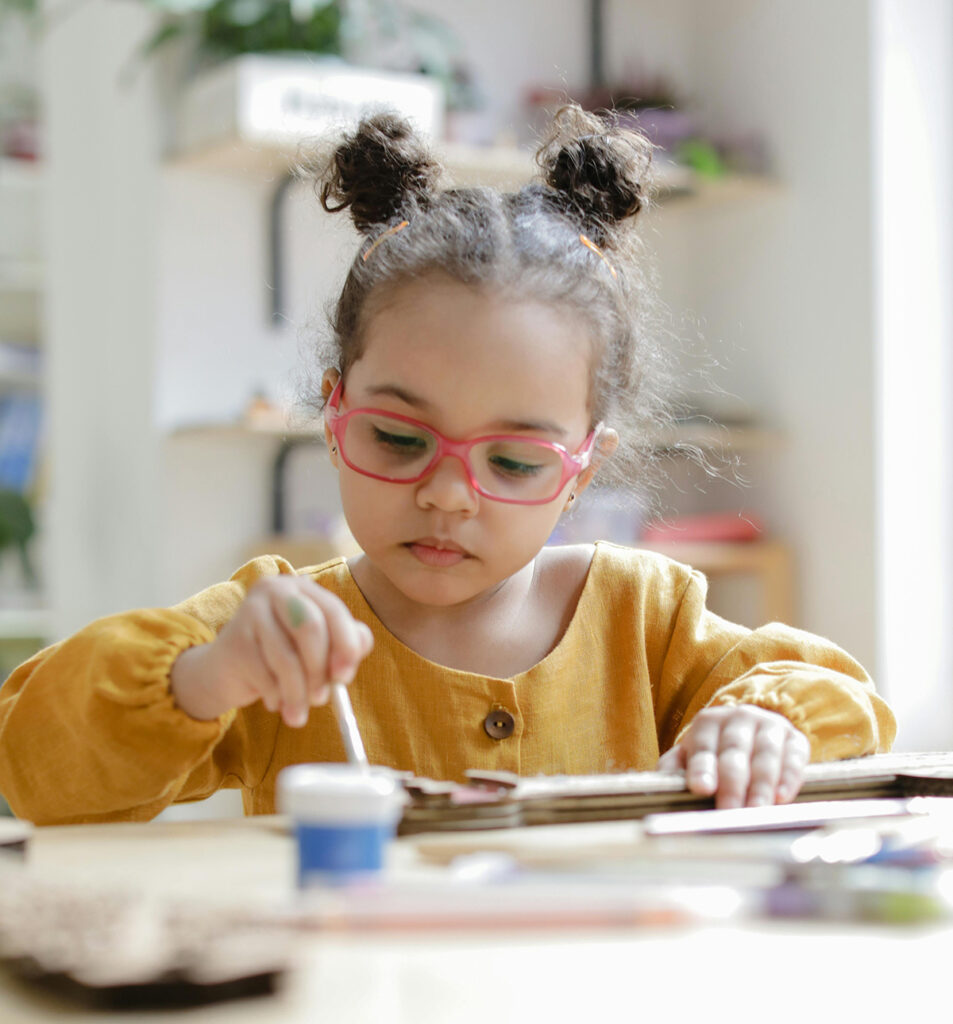
The Blossom Curriculum is built on the understanding that children are natural learners, and that each child develops at their own pace.
We recognise that children learn best in environments where they feel comfortable, valued and safe, and having fostered strong connections with their teachers, educators, and peers.
Our approach is holistic, focusing on the whole child – their emotional, social, physical, and cognitive development. All of which support the development of a growth mindset, equipping children with the skills and attitudes they need to thrive throughout their lives.
In addition to the Australian Early Years Learning Framework, our curriculum in inspired by the Reggio Emilia philosophy – a child-centered, hands-on approach where children actively learn and develop by exploring their interests.
Key elements of the Blossom Curriculum include play-based learning, project-based learning, offering an indoor-outdoor program and developing the key skills of a growth-mindset.

Our Blossom Curriculum
The Blossom curriculum is designed to ensure every child is provided with a wide range of experiences and activities that cover all the learning areas within the program.
Every fortnight, our educators and teachers prepare new activities to fit different developmental areas of our curriculum.
The Blossom Curriculum is made up of 9 developmental areas:
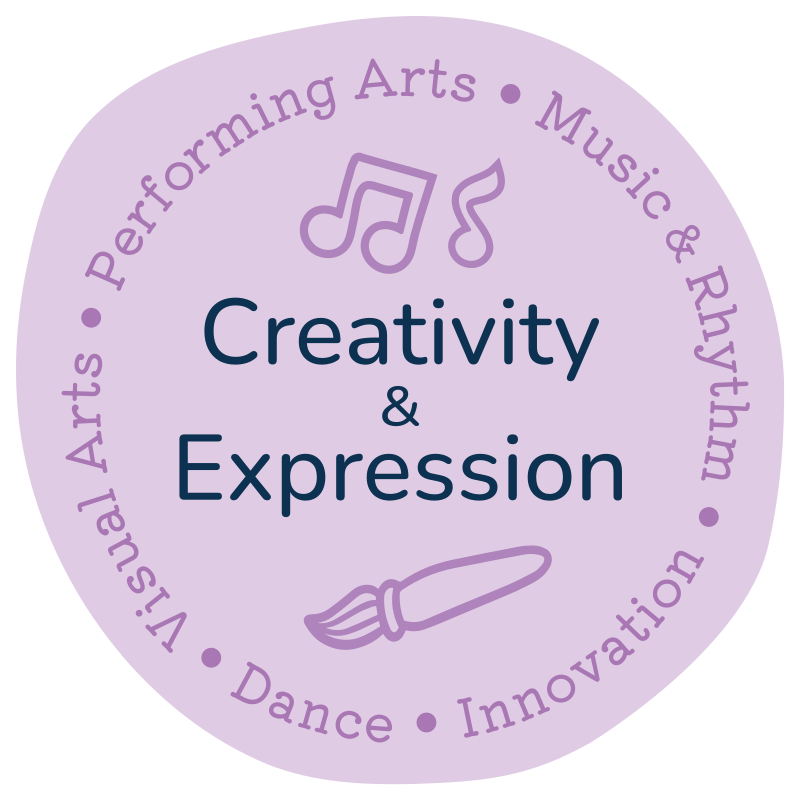
Creativity & Expression
Visual arts, performing arts, music & rhythm, dance, innovation
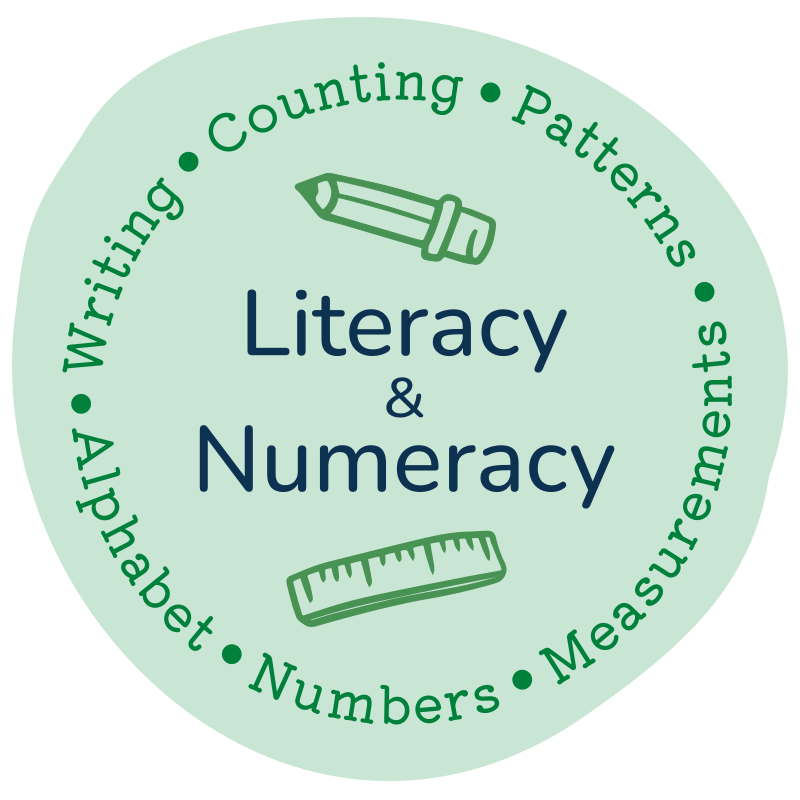
Literacy & Numeracy
Alphabet, writing, counting, numbers, patterns, measurements
Science & Technology
Experiments, research, exploration, test & learn, discovery
Nature & Environment
Sustainability, flora & fauna, recycling, conservation, weather
Imagination & Wonder
Discovery, role play, pretend play, storytelling, curiosity
Myself & Others
Autonomy, resilience, family, emotional regulation, relationships, self-discovery
Health & Wellbeing
Nutrition, physical play, mindfulness, hygiene, healthy habits
Construction & Design
Building, architecture, creation, engineering, tools, shapes
Society & The World
Community, cultures, diversity, history, first nations
The Reggio Emilia approach
The Blossom Curriculum is inspired by the Reggio Emilia approach, a child-centered philosophy of early childhood education that emphasises learning through exploration, play, and collaboration, and viewing children as capable, curious, and active participants in their own learning, valuing their unique interests and perspectives.
Our flexible curriculum is designed to adapt to children’s evolving interests and needs, and by incorporating project-based learning in our program, we can structure activities around exciting adventures that enable in-depth exploration over time. And through documenting the children’s learning journeys and reflecting on their work, we believe we can celebrate and deepen the overall learning process.
At Blossom Early Learning, we value collaboration with families and the wider community, as we recognise that these partnerships enrich the children’s educational experiences.
We also place a strong emphasis on exploration and discovery, making our environment a ‘third teacher’ through providing learning spaced filled with natural materials that encourage investigation. Environment and sustainability are core elements of our program as we integrate various activities into our daily practices, aiming to teach the children to make sustainable choices a normal part of their routine and overall life.
The importance of a growth mindset in young children
‘Progress over perfection’
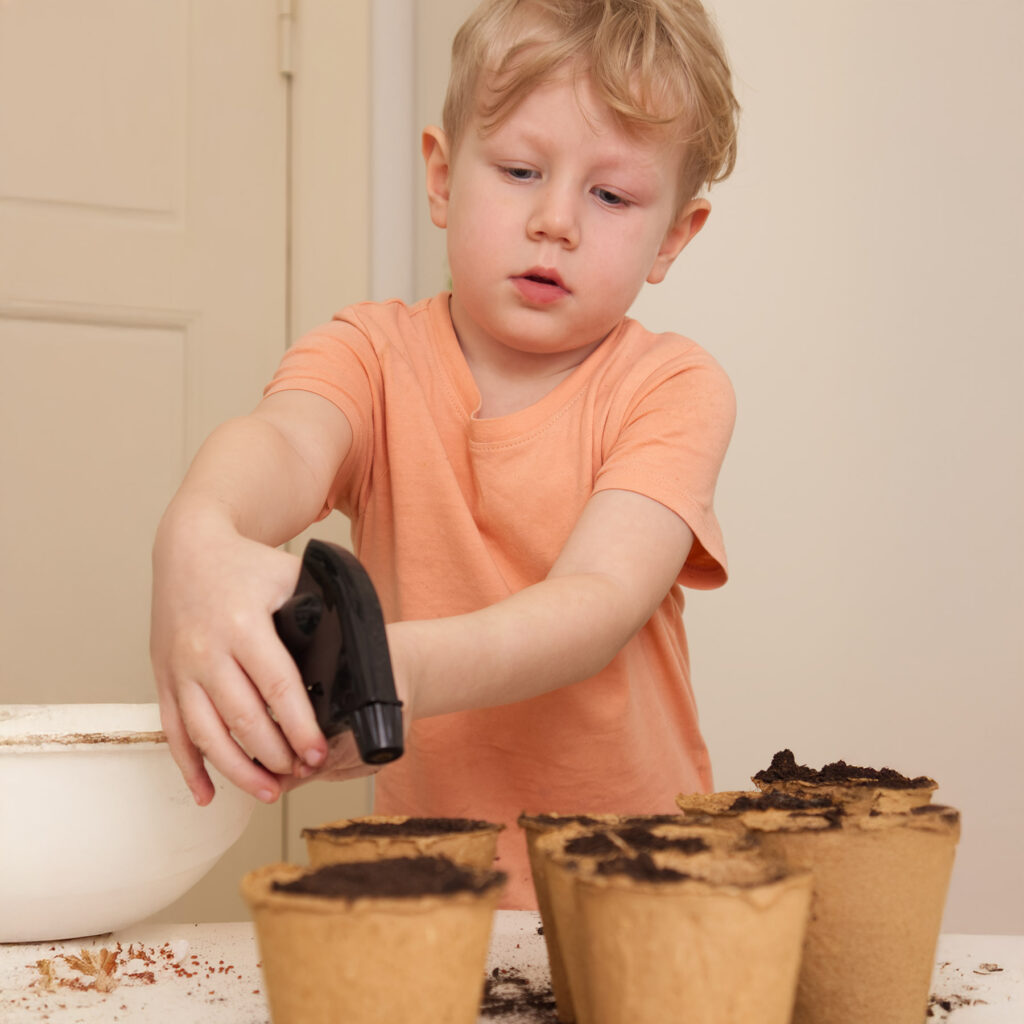
We believe a growth mindset in early learning is crucial as it equips children with the belief that their abilities can be developed through effort and practice. This mindset fosters a love of learning, encourages resilience in the face of challenges, and leads to better academic outcomes and social-emotional development. It also promotes lifelong learning and adaptability, essential skills for navigating a rapidly changing world.
Cultivating a growth mindset in early learning is not just about academic achievement; it’s about equipping children with the skills and attitudes they need to thrive throughout their lives.
Enhanced learning and achievement
Children with a growth mindset are more likely to embrace challenges and persevere through difficulties, leading to greater learning and achievement over time. They view mistakes as opportunities for learning rather than as signs of their inherent limitations, fostering a more positive and productive approach to learning.
Improved social and emotional skills
A growth mindset helps children develop resilience and the ability to bounce back from setbacks, promoting better emotional regulation and coping mechanisms. They are more likely to empathise with others, understand that learning is a process, and develop healthier social interactions.
Lifelong learning and adaptability
Children with a growth mindset are more open to new experiences and willing to adapt to changing circumstances, making them better equipped for the challenges and opportunities of the future. They develop a sense of agency and are more likely to become lifelong learners who embrace continuous growth and development.
Fostering a love of learning
By embracing challenges and viewing mistakes as learning opportunities, children develop a more positive and enthusiastic approach to learning. This positive attitude can lead to greater motivation, curiosity, and a lifelong passion for learning.
The Australian Early Years Learning Framework (EYLF)
At the heart of our Blossom Curriculum is ‘Belonging, Being and Becoming’, the Early Years Learning Framework for Australia.
This is the Australian Government’s national framework for early childhood education, and a key component of the National Quality Framework (NQF) for early childhood education and care which is designed to encourage continuous improvement of education and care services across Australia.
The EYLF defines the principles, practices and outcomes essential to every early learning program and is designed to ensure all children, from birth to five years of age, receive high quality learning experiences.
The Framework has a strong emphasis on play-based learning, child-centered approaches, and a focus on children’s social and emotional development. It aims to achieve five overall Learning Outcomes:
- Children have a strong sense of identity
- Children are connected with and contribute to their world
- Children have a strong sense of wellbeing
- Children are confident and involved learners
- Children are effective communicators